

Inspection Demands in Civil Engineering - Metal Corrosion Management
Routine inspection and maintenance are key to ensuring safety, reliability, and cost efficiency in civil engineering infrastructure. Early detection of corrosion not only prevents catastrophic failures but also extends the life of assets – protecting public safety and investment.
On This Page
Ensuring Structural Integrity Through Regular Inspections
Metal corrosion poses a major threat to the safety, performance, and lifespan of civil engineering structures. Regular inspections are essential to identify early signs of deterioration, assess structural health, and plan effective maintenance.
Importance of Inspections in Civil Engineering
Civil engineering structures are constantly exposed to environmental and mechanical stresses that can cause wear, fatigue, and corrosion. Periodic inspections ensure that:
- Safety standards are met and maintained
- Structural failures are prevented before they occur
- Maintenance costs are reduced through early detection
- Compliance with local and international engineering codes is achieved
- The service life of infrastructures is maximised.
Inspection programs are often guided by standards such as ISO 13822, ASCE 11, and EN 1090, which outline requirements for evaluating existing structures.
Inspection Demands Related to Metal Corrosion
Corrosion inspection involves visual evaluation, Non-Destructive Testing (NDT), and sometimes laboratory analysis. The process typically includes:
- Surface Condition Assessment – identifying rust, pitting, and scaling
- Ultrasonic Thickness Measurement – using ultrasonic testing to detect material loss or wall thinning
- Coating Evaluation – checking the condition and adhesion of protective paints or galvanisation
- Environmental Analysis – examining humidity, salt exposure, and pollutants that accelerate corrosion
- Structural Integrity Testing – ensuring load-bearing elements remain within safe limits.
Inspections are scheduled based on structure type, exposure conditions, and previous maintenance history – ranging from annual to multi-year intervals.
Structures Requiring Corrosion Inspections
Many civil structures incorporate steel or other metals that are susceptible to corrosion, so regular inspections are critical for the following:
Transportation Infrastructure
Corrosion monitoring in transportation infrastructure is crucial for ensuring structural safety, durability, and cost-effective maintenance, this includes areas such as:
- Steel bridges (trusses, girders, cables, connections)
- Highway guardrails and sign supports
- Railway bridges and steel frames
- Tunnel linings and ventilation structures.
Marine and Coastal Structures
Marine and coastal structures are continuously exposed to harsh saltwater environments, making them highly susceptible to metal corrosion, this includes areas such as:
- Offshore platforms and pipelines
- Harbour cranes, docks, and marine piling
- Port infrastructure, such as jetties and piers
- Shipyard facilities and loading arms.
Building and Industrial Facilities
In buildings and industrial facilities, metal corrosion can compromise structural integrity, safety, and operational efficiency. Steel beams, pipelines, tanks, HVAC systems, and reinforced concrete elements are all vulnerable to corrosion, especially in environments with humidity, chemical exposure, or pollutants. This includes areas such as:
- Structural steel frames in buildings and factories
- Roof trusses, columns, and beams
- Industrial tanks, silos and stacks
- Plant equipment such as pressure vessels, engine cylinder block, and gas cylinders
- HVAC systems, ducts, and support structures.
Utility and Energy Infrastructure
Utility and energy infrastructure relies heavily on metallic components that are continuously exposed to harsh environmental and operational conditions, this includes areas such as:
- Transmission towers and poles
- Wind turbine towers
- Water treatment plants and reservoirs
- Oil and gas storage facilities.
Modern Inspection Technologies
Modern corrosion inspection techniques help engineers to assess the condition of assets with precision. These include:
- Ultrasonic Testing (UT) – measures wall thickness loss
- Magnetic Particle and Dye Penetrant Testing (MT/PT) – detects surface cracks
- Eddy Current Testing (ECT) – identifies subsurface flaws
- Corrosion Potential Mapping – evaluates electrochemical activity
- Drones and 3D Scanning – allow for remote visual inspection of hard-to-reach areas.
Cygnus Ultrasonic Testing Equipment
Cygnus Ultrasonic Testing Equipment includes a range of Ultrasonic Thickness Testers that are considered great tools for civil engineering because they offer accurate, reliable, and non-destructive tests (NDT) on material thickness – especially when assessing the condition of structures such as bridges, tanks, pipelines, and concrete or steel elements.
Cygnus 6+ PRO
The Cygnus 6+ PRO is a versatile ultrasonic thickness tester that enables civil engineers to assess structural components for corrosion and wall thickness. Its through-coating measurement capability enables accurate readings without removing protective coatings of up to 20mm thick, while Echo-Echo and Single-Echo modes deliver reliable results even on extremely corroded or pitted surfaces. Built-in data logging supports compliance and asset management through easy record-keeping and reporting. Designed for harsh environments, this device withstands dust, moisture, and impact, and optional high-temperature probes allow in-service corrosion inspections on hot surfaces. Its compatibility with various materials – such as steel, composites, and plastics – enhances flexibility, and live A-scan / B-scan verification ensures accurate, trustworthy readings.
Related Industries: Plant Maintenance
Cygnus Underwater Tester
The Cygnus Underwater tester is designed for civil engineering inspections of submerged or splash-zone structures such as bridges, piers, piles, dams, and canal locks. Its 300m depth rating enables reliable monitoring of underwater and submerged components, while ultrasonic thickness measurement (UTM) detects corrosion and metal loss without requiring coatings to be removed. The through-coating capability, using Multiple-Echo mode, allows efficient inspections of coated steel surfaces. Built-in data logging supports long-term record-keeping and trend analysis for maintenance planning and asset management. Engineered for harsh marine environments, the tester’s robust, diver-friendly design ensures reliable performance in low-visibility, challenging underwater conditions.
Related Industries: Subsea and Underwater Inspection Equipment

Cygnus 6+ PRO
Designed for professional users working within inspection, repair and maintenance, this is Cygnus' most advanced thic...
More Info
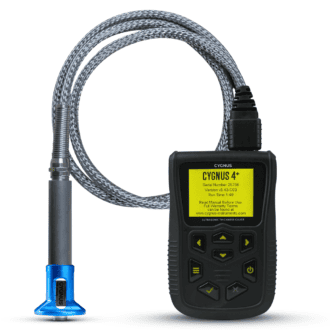
Cygnus 4+ General Purpose
A metal thickness tester used for a wide range of applications. This thickness tester offers: an A-scan display; seq...
More Info
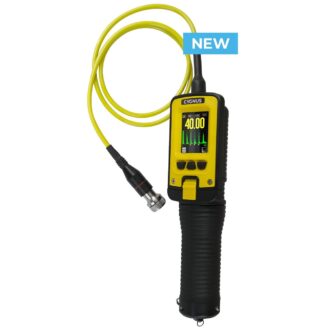
NEW Cygnus Underwater
Designed for divers needing to take reliable thickness measurements of underwater structures, the Cygnus Underwater d...
More Info